Einstein, de Broglie,
and Schrödinger:
Rediscovering the Foundations of Quantum Mechanics 100 Years Later
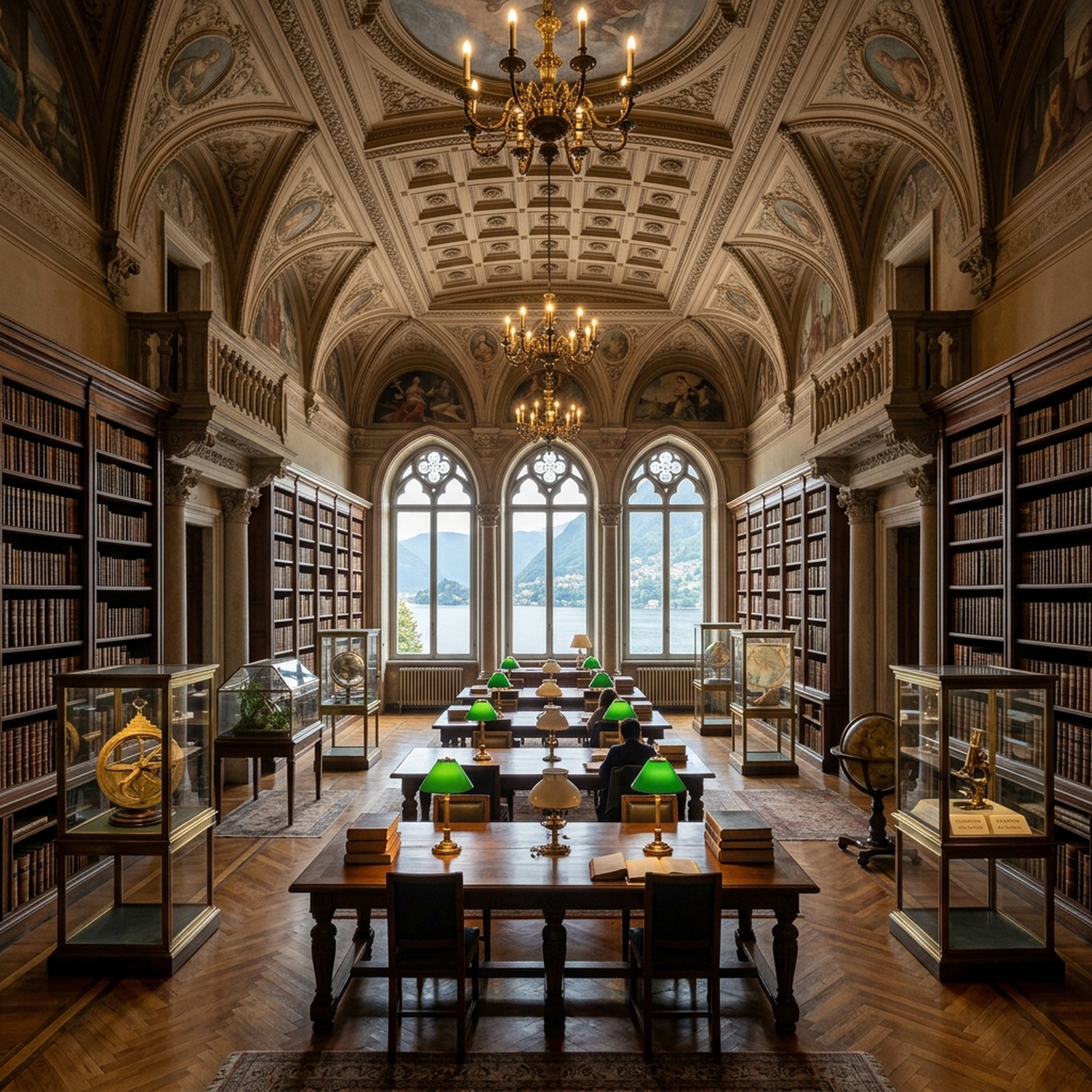
In September 1927, the world’s leading physicists gathered in Como to establish the Copenhagen interpretation. Einstein, de Broglie, and Schrödinger were absent or silent. One century later, we return to Como to revive their realist, wave-centric, and geometric alternatives.
100 Years of Quantum Debates:
Revisiting the 1927 Como Legacy
In September 1927, the world’s most eminent physicists gathered in Como, Italy, for the International Congress. It was here that Niels Bohr first presented the principle of Complementarity, laying the groundwork for the Copenhagen interpretation. This event defined the orthodox path of quantum mechanics for the next century, promoting an anti-realist, operational view of physical systems.
However, the three pioneers who built the mathematical and physical foundations of quantum theory—Albert Einstein, Louis de Broglie, and Erwin Schrödinger—strongly objected to this operationalist turn. They spent their lives seeking a complete, realist, and local description of nature.
The Como 2027 Foundations conference returns to the historic shores of Lake Como to mark the centenary of this debate. We do not celebrate the establishment of orthodox dogmas; instead, we gather to explore and advance the realist, wave-centric, and geometric alternatives proposed by these three founding fathers.
"We aim to examine whether the alternative paths proposed by Einstein, de Broglie, and Schrödinger can offer new breakthroughs in solving the current crises in foundational physics—bridging the gap between general relativity and quantum mechanics."
— The Organizing CommitteeAlbert Einstein
Local Realism & Field UnificationCritiques of quantum statistical descriptions. Advocated for a complete theory based on non-singular particle-like field solutions, anticipating local hidden variable architectures.
Louis de Broglie
Pilot Wave & Double SolutionProposed that particles are guided by physically real wave fields. His Double Solution program sought to model quantum particles as singular structures inside continuous waves.
Erwin Schrödinger
Ontic Wave MechanicsInterpreted the wave function as a real, physical field of matter density rather than a probability amplitude. Opposed collapse postulates and discontinuous quantum jumps.
Core Themes & Areas of Interest
The program explores mathematical physics, foundations of quantum mechanics, and their philosophical implications. Contributions are focused on the five primary areas.
The Quest for Realism & Completeness
Einstein’s critiques of quantum mechanics, hidden variables, and local realism.
- The EPR paradox and its modern legacies
- Local realism vs. quantum nonlocality
- Hidden variable theories (deterministic and stochastic)
- Centenary reassessment of Einstein’s objections to the Copenhagen hegemony
Wave Mechanics & Dualism
De Broglie’s pilot-wave theory, double-solution framework, and modern hydrodynamic quantum analogues.
- The pilot-wave paradigm and de Broglie-Bohm mechanics
- The double-solution program: looking for soliton-like wave packets
- Hydrodynamic droplets: macroscopic realism mimicking quantum behavior
- The physical reality of the pilot wave
The Wave Function & Ontic Reality
Schrödinger’s wave mechanics, the interpretation of the wave function, and of quantum fields.
- Is the wave function ontic (real) or epistemic (representational)?
- Schrödinger’s charge density interpretation and its modern extensions
- Many-worlds, spontaneous collapse (GRW), and self-field effects
- Unification of particle dynamics inside the wave configuration
Geometrization & Unification
Relativistic foundations, unified field theories, and the intersection of gravity and the quantum world.
- Einstein’s classical unified field program
- Quantum mechanics in curved spacetimes
- Weyl geometries, torsion, and Planck-scale quantization
- Quantum gravity, antimatter, and charge non-conservation tests
Alternative Paradigms & Philosophy
Comparative analyses between the Copenhagen hegemony and realist/causal alternatives.
- 100 years of Copenhagen: historical entrenchment and critical responses
- The role of philosophy of physics in choosing interpretations
- EPR toy models and experimental testability of superluminal signals
- Hydrodynamic analogies and macroscopic wave-particle systems
Speakers & Lecturers
Prominent theoretical physicists, experimentalists, and historians of science presenting their latest advancements in realist quantum foundations.
Valia Allori
Northern Illinois UniversityMany-Worlds with Matter Density and Schrödinger's First Quantum Theory
In this lecture, we re-evaluate Schrödinger's early wave mechanics, which originally interpreted the wave function as representing a continuous distribution of matter in space. We show that when combined with a modern Many-Worlds framework, this matter density ontology provides a rigorous, realist picture of quantum mechanics that avoids both the problem of preferred bases and the traditional measurement problem, offering a compelling alternative to particle-based collapse models.
Ignazio Licata
Institute for Scientific Methodology, PalermoTeorie di quantizzazione primitiva sulla scala di Planck a confronto
We compare various approaches to primitive quantization at the Planck scale. By focusing on non-local quantum geometries, Weyl-Dirac fields, and topological structures, we investigate how the continuum of spacetime emerges from discrete quantum foundations and discuss the observational implications for quantum cosmology and high-energy physics.
Mayeul Arminjon
CNRS / Université Grenoble AlpesClassical-Quantum Correspondence and Quantum Mechanics in Curved Spacetime
This talk explores the classical-quantum correspondence for a Dirac particle in curved spacetime. We formulate a wave equation that preserves the probability current and discuss the mathematical foundations of analyzing quantum mechanics in gravitational fields, pointing towards a unified classical-quantum framework.
José R. Croca
University of LisbonState of the Art of Experiments to Decide on the Physical Reality of de Broglie Waves
We present a comprehensive overview of the latest experimental setups designed to test the physical reality of de Broglie pilot waves. In particular, we analyze wave-memory interpretations of quantum mechanics and show how recent high-precision interferometry and macroscopic hydrodynamic droplet experiments shed light on the wave-particle dualism.
Andrea Carati
University of MilanProgresses Along the Lines of the Einstein Classical Program
Co-presented with Luigi Galgani. We review recent mathematical developments in the Einstein classical program of representing particles as singularities or localized concentrations of classical fields. We show how electrodynamic self-interactions and non-linear partial differential equations can give rise to discrete, quantum-like behaviors without departing from classical realism.
Luigi Galgani
University of MilanClassical Field Dynamics and Quantum Phenomelogies
Co-presented with Andrea Carati. Exploring statistical mechanics of classical systems, self-field effects, and their connection to Einsteinian classical unification. We address the historical objections of the 1920s and show how modern tools in dynamical systems revive these classical concepts.
Conference Schedule
Three days of intense research lectures, discussion sessions, and historical tours exploring the frontiers of quantum realism.
Welcome Address & Historical Overview of Como 1927
— Federico ComparsiOpening remarks tracing the centenary significance and the physical context of Como.
Many-Worlds with Matter Density and Schrödinger's First Theory
— Valia AlloriRevisiting Schrödinger's continuous matter interpretation in modern multiverse frameworks.
Lunch Break & Poster Session
Einstein's Classical Program: Electrodynamics & Localized Fields
— Andrea Carati & Luigi GalganiInvestigating deterministic particles as singularities of non-linear fields.
EPR Toy Models & Nonlocality Constraints
— Federico ComparsiA mathematical analysis of local hidden variables with delay dynamics.
Como: The Historic Cradle of Quantum Mechanics
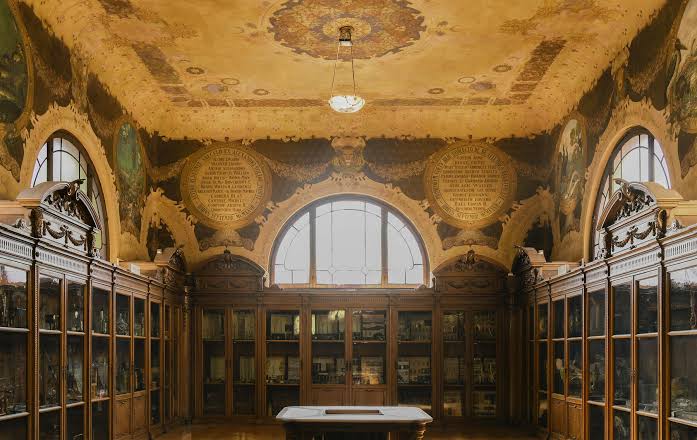
The conference will be hosted in the prestigious Palazzo Carducci and the historic halls of Museo Casartelli. Nestled in the center of Como, these structures house invaluable collections of 19th-century scientific, electromagnetic, and thermodynamic instruments.
By lecturing amidst original tools of physical inquiry, we bridge the gap between historical realism and modern quantum foundations. The museum hall, decorated with murals commemorating scientific progress, offers an inspiring setting for intellectual debate.
A short walk away lies the Tempio Voltiano (Alessandro Volta Temple) on the shores of Lake Como, built to honor the pioneer of electricity. We invite participants to explore the lakefront, trace Volta’s heritage, and reflect on the centenary debates that reshaped our view of reality.
Walk Into the Laboratory
The hall has been reconstructed in a full three-dimensional 360° panorama — look around in all directions, zoom or step closer with the depth control, and select an instrument to be taken to it.